The Real Signs Your Systems Are Working Together
Most businesses know when operations feel messy.
The team is searching for information too often. Customers have to repeat themselves. Someone asks, “Who owns this?” more than they should. A message lives in one place, the calendar in another, and the customer details somewhere else entirely.
That kind of friction becomes so normal that teams stop noticing it. They call it busy. They call it growth. They call it part of running a business.
But it usually means something simpler.
Your systems are not working together yet.
That matters more than ever. Salesforce reported in 2024 that 81% of business leaders are still struggling with data fragmentation and silos, and Microsoft’s 2025 Work Trend Index found employees are interrupted every two minutes, adding up to 275 interruptions a day, with nearly half saying work feels chaotic and fragmented. (Salesforce)
So how do you know whether your business is actually becoming more connected?
Not by counting logins. Not by turning on more features. Not by adding more software and hoping it solves the problem.
You know by watching whether the business feels clearer to run.
Here are four signs that tell you your systems are finally starting to work together.
1. Your team spends less time searching
One of the clearest signs of disconnected operations is how often people have to stop and hunt for answers.
Where is the customer’s number? Did anyone reply already? Is this on the calendar? Was this invoice sent? What happened last time?
When those answers live across different tools, inboxes, and people, work slows down before the real work even starts.
That is exactly the kind of friction connected systems are supposed to remove. HubSpot’s 2024 State of Service report found that only 35% of CRM leaders say their customer data is fully integrated with their service tools, and 74% say tool switching makes ticket resolution take longer.
That means one of the best signs your systems are improving is simple.
Your team is searching less.
They are not rebuilding the story from scratch every time. They are not bouncing between tabs to understand one customer. They are getting context faster and acting faster.
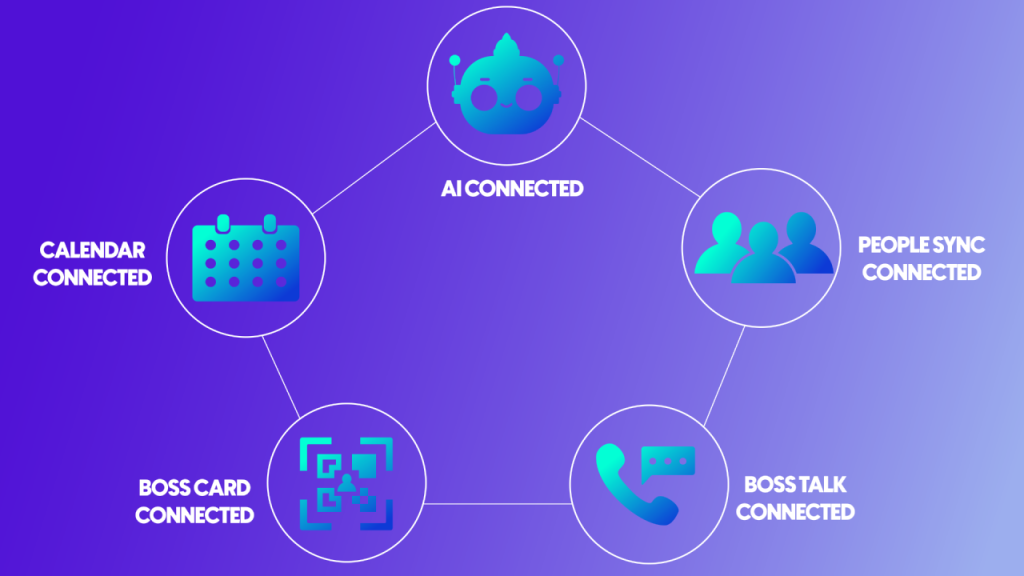
That is also where BOSS.Tech can start showing its value. BOSS.Tech’s connects the tools you already use, syncs your data across them, and organizes information across tools like Calendar, Tickets, and Accounting so you are not searching in five places to get one answer.
If the platform is doing its job, your business should feel less like a scavenger hunt.
2. Handoffs are cleaner
A messy business does not only lose time in customer-facing work.
It loses time internally.
One person answers the message. Another owns the appointment. Another sends the invoice. Another handles support.
If those handoffs are unclear, the business starts dropping context between people instead of passing it along.
That is when teams get stuck in the same questions over and over.
Who is handling this? Did someone already follow up? Is this customer new or existing? What happened before this got to me?
HubSpot’s 2024 report found that only 24% of service leaders had full-funnel visibility of the customer experience, meaning most teams are still working with important gaps in the story.
A connected business should feel different.
Handoffs should get cleaner. Context should travel better. The next person should not need a second investigation just to move the work forward.
This is where connected operations become visible in real life. BOSS.Tech centralizes communication and synchronizes business data so it is consistent and usable everywhere you work, which is exactly what smoother handoffs depend on.
If your systems are really improving, internal transitions should feel less fragile.
3. Your customer records are more complete and less duplicated
A business cannot run cleanly on messy people data.
If the same person appears in multiple tools with slightly different names, emails, or histories, the business does not just look disorganized. It becomes harder to communicate, follow up, and make decisions confidently.
That is not a niche problem. It is a common one.
Recent data quality reporting in 2024 and 2025 continues to flag duplicate records as a major operational problem, with CRM duplication rates cited as reaching up to 20% in some systems, creating confusion and slowing work. (WinPure)
That is why one of the strongest signs your systems are finally working together is this: your customer records start getting cleaner.
You see fewer duplicates. You have fewer conflicting versions of the same contact. Your team has a better shot at seeing one usable history instead of three partial ones.
People Sync is BOSS.Tech’s way of matching and unifying the same person across your connected tools so their info is usable in one place.
People Sync connects your services and syncs data across them so it stays consistent and usable across areas like Calendar, Tickets, and Accounting, instead of forcing you to search in multiple places for one answer.
That means cleaner records are not just a backend improvement. They are a frontline improvement too.
Because better data makes every conversation, follow-up, and handoff easier.
4. Fewer tasks depend on memory
One of the biggest signs a business is too fragmented is how much it still depends on people remembering things.
Remember to follow up. Remember what was promised. Remember which calendar it was on. Remember whether a reminder went out. Remember who owns the next step.
That works for a while. Then the business grows, and memory stops scaling.
Microsoft’s 2025 Work Trend Index paints a pretty clear picture of why. Employees are being interrupted constantly, with 275 interruptions a day on average, and 48% of employees say work feels chaotic and fragmented. (Microsoft)
In that kind of environment, memory is not a system. It is a risk.
So one of the most important signs your operations are getting healthier is that fewer things rely on someone simply remembering to do them.
The business should start feeling more supported by the system itself.
BOSS.Tech is more than a place to store information. It connects communication, scheduling, payments, contacts, and workflows in one system, making it easier to manage the work that usually falls through the cracks. Its calendar syncs in one place and connects with reminders, scheduling tools, and bulk texting, helping teams keep follow-up moving without relying on memory.
That is what progress looks like.
Not more mental load. Less.
What not to mistake for progress
A lot of teams measure the wrong things.
They celebrate more tools, more dashboards, more integrations, more activity inside the platform.
But those are setup signals. Not operating signals.
The better question is whether the business feels less scattered than it did before.
Can the team find what it needs faster? Are handoffs cleaner? Is customer information more usable? Are fewer things slipping because someone forgot?
That is what connected operations should change.
A better business system should not just make your stack look more modern.
It should make the business easier to run.
That is the real test.
Less searching. Cleaner handoffs. Better records. Less dependence on memory.
If those things are improving, your systems are finally starting to work together.
And that is exactly the kind of shift BOSS.Tech is built for. A connected operating layer where your people, communication, calendars, and workflows stop living in separate worlds and start working like one business.
BOSS.Tech – Business.Easier