Sally Quiros

The Real Signs Your Systems Are Working Together

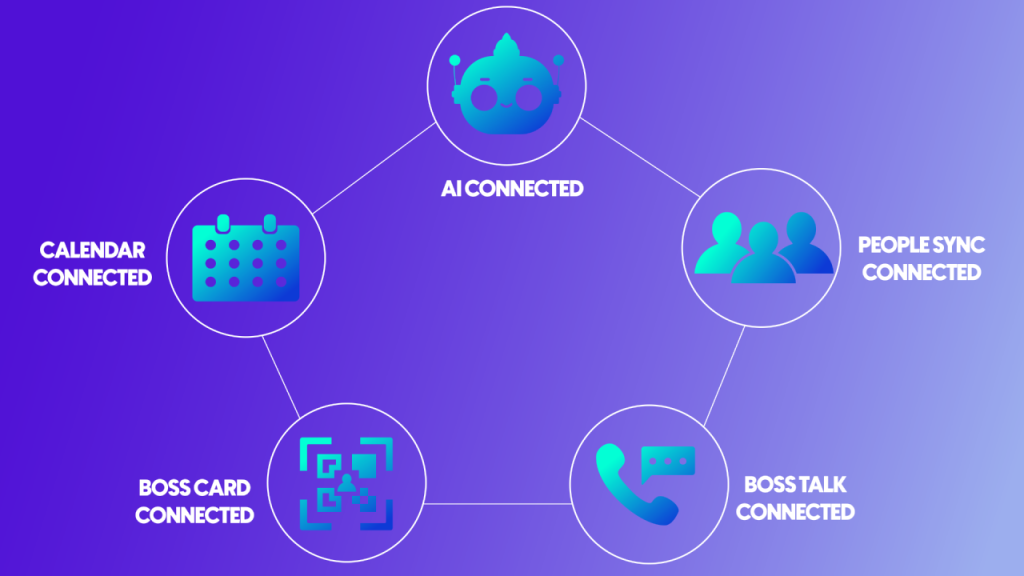
The Real Signs Your Systems Are Working Together Most businesses know when operations feel messy. The team is searching for information too often. Customers have to repeat themselves. Someone asks, “Who owns this?” more than they should. A message lives in one place, the calendar in another, and the customer details somewhere else entirely. That kind of friction becomes so normal that teams stop noticing it. They call it busy. They call it growth. They call it part of running a business. But it usually means something simpler. Your systems are not working together yet. That matters more than ever. Salesforce reported in 2024 that 81% of business leaders are still struggling with data fragmentation and silos, and Microsoft’s 2025 Work Trend Index found employees are interrupted every two minutes, adding up to 275 interruptions a day, with nearly half saying work feels chaotic and fragmented. (Salesforce) So how do you know whether your business is actually becoming more connected? Not by counting logins. Not by turning on more features. Not by adding more software and hoping it solves the problem. You know by watching whether the business feels clearer to run. Here are four signs that tell you your systems are finally starting to work together. 1. Your team spends less time searching One of the clearest signs of disconnected operations is how often people have to stop and hunt for answers. Where is the customer’s number? Did anyone reply already? Is this on the calendar? Was this invoice sent? What happened last time? When those answers live across different tools, inboxes, and people, work slows down before the real work even starts. That is exactly the kind of friction connected systems are supposed to remove. HubSpot’s 2024 State of Service report found that only 35% of CRM leaders say their customer data is fully integrated with their service tools, and 74% say tool switching makes ticket resolution take longer. That means one of the best signs your systems are improving is simple. Your team is searching less. They are not rebuilding the story from scratch every time. They are not bouncing between tabs to understand one customer. They are getting context faster and acting faster. That is also where BOSS.Tech can start showing its value. BOSS.Tech’s connects the tools you already use, syncs your data across them, and organizes information across tools like Calendar, Tickets, and Accounting so you are not searching in five places to get one answer. If the platform is doing its job, your business should feel less like a scavenger hunt. 2. Handoffs are cleaner A messy business does not only lose time in customer-facing work. It loses time internally. One person answers the message. Another owns the appointment. Another sends the invoice. Another handles support. If those handoffs are unclear, the business starts dropping context between people instead of passing it along. That is when teams get stuck in the same questions over and over. Who is handling this? Did someone already follow up? Is this customer new or existing? What happened before this got to me? HubSpot’s 2024 report found that only 24% of service leaders had full-funnel visibility of the customer experience, meaning most teams are still working with important gaps in the story. A connected business should feel different. Handoffs should get cleaner. Context should travel better. The next person should not need a second investigation just to move the work forward. This is where connected operations become visible in real life. BOSS.Tech centralizes communication and synchronizes business data so it is consistent and usable everywhere you work, which is exactly what smoother handoffs depend on. If your systems are really improving, internal transitions should feel less fragile. 3. Your customer records are more complete and less duplicated A business cannot run cleanly on messy people data. If the same person appears in multiple tools with slightly different names, emails, or histories, the business does not just look disorganized. It becomes harder to communicate, follow up, and make decisions confidently. That is not a niche problem. It is a common one. Recent data quality reporting in 2024 and 2025 continues to flag duplicate records as a major operational problem, with CRM duplication rates cited as reaching up to 20% in some systems, creating confusion and slowing work. (WinPure) That is why one of the strongest signs your systems are finally working together is this: your customer records start getting cleaner. You see fewer duplicates. You have fewer conflicting versions of the same contact. Your team has a better shot at seeing one usable history instead of three partial ones. People Sync is BOSS.Tech’s way of matching and unifying the same person across your connected tools so their info is usable in one place. People Sync connects your services and syncs data across them so it stays consistent and usable across areas like Calendar, Tickets, and Accounting, instead of forcing you to search in multiple places for one answer. That means cleaner records are not just a backend improvement. They are a frontline improvement too. Because better data makes every conversation, follow-up, and handoff easier. 4. Fewer tasks depend on memory One of the biggest signs a business is too fragmented is how much it still depends on people remembering things. Remember to follow up. Remember what was promised. Remember which calendar it was on. Remember whether a reminder went out. Remember who owns the next step. That works for a while. Then the business grows, and memory stops scaling. Microsoft’s 2025 Work Trend Index paints a pretty clear picture of why. Employees are being interrupted constantly, with 275 interruptions a day on average, and 48% of employees say work feels chaotic and fragmented. (Microsoft) In that kind of environment, memory is not a system. It is a risk. So one of the most important signs your operations are getting healthier is that fewer things rely on someone simply remembering to do them. The business should start feeling more supported

The Real Signs Your Systems Are Working Together Read More »

What real value from a Business Operating System SuperApp looks like

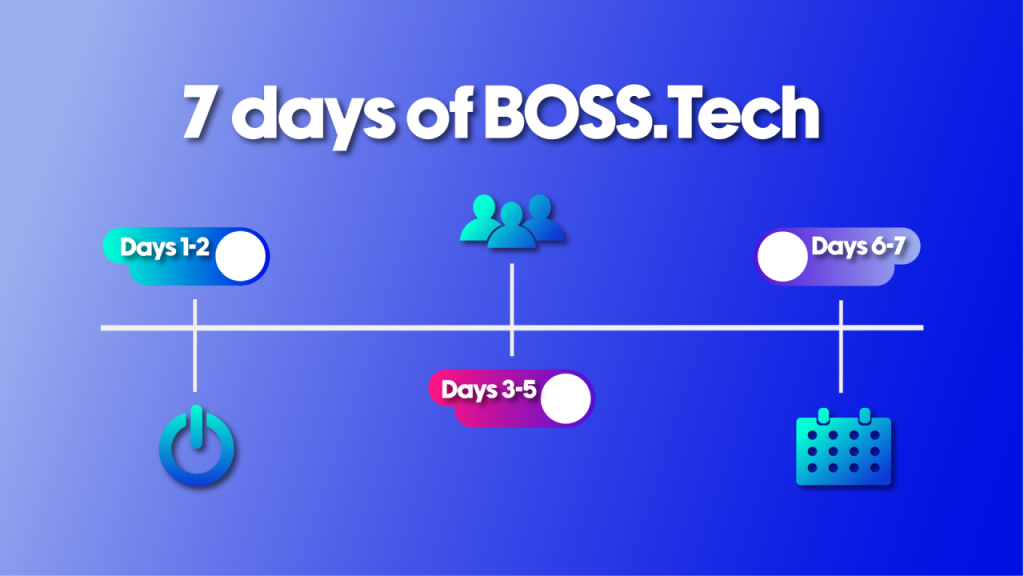
What real value from a Business Operating System SuperApp looks like Your First 7 Days with BOSS.Tech Most small businesses do not break all at once. They get buried in fragments. A calendar in one place. Messages in another. Invoices somewhere else. Customer details split across tools, inboxes, and team memory. At first, that feels manageable. Then growth shows up. More leads. More follow-up. More appointments. More invoices. More chances for something small to slip through. That is usually the moment when businesses think they need more hustle. What they actually need is more connection. BOSS.Tech was built for that shift. It is an AI-powered Business Operating System SuperApp designed to connect the tools you already use, sync data across them, and help you manage messaging, scheduling, contacts, payments, and workflows in one connected system. BOSS.Tech’s own FAQ describes it as replacing app-switching with one connected operating layer for the business. (BOSS.Tech) The goal of your first 7 days in BOSS.Tech is not to turn on everything. It is to connect the parts of your business that create momentum first. Here is how to do that. Days 1 to 2. Set the foundation Before you touch automations, AI workflows, or advanced use cases, start with the basics. Your first job is to make BOSS.Tech your real operating home. What to do in BOSS.Tech these days 1. Create your account and add your company BOSS.Tech’s official getting-started guidance is simple: sign up, create your account, add your company, and then connect the services you already use. 2. Connect your core services Start with the platforms that already carry the most important parts of your business. BOSS.Tech specifically highlights integrations like Google Calendar, QuickBooks, Zendesk and Socials and once those services are connected, BOSS.Tech starts syncing the data so you can run messaging, scheduling, and workflows from one place. 3. Set up your company structure and access If you have teammates, this is the week to decide who needs access to what. BOSS.Tech company owners can grant limited access to employees and customers using permissions and People Sync-related controls. 4. Get your BOSS Card ready This is a small setup step that can pay off quickly. BOSS.Tech automatically creates a BOSS Card when you log in, and you can create separate BOSS Cards for each company. It can be shared by QR code, text, email, and socials. Why these days matters These are the days where you stop treating BOSS.Tech like “another app” and start making it the place where your business gets organized. You are not trying to perfect every workflow yet. You are trying to reduce fragmentation. Because if the foundation is messy, every step after this gets harder Days 3 to 5. Clean up your people and conversations Once the company is set up, your next move is to make sure BOSS.Tech actually knows who your people are and where your communication lives. A lot of businesses think they have a follow-up problem. Usually, they have a context problem. The same person exists in multiple tools. One version has the right number. Another has the right email. A teammate has extra context in a text thread. Someone else answered them from a ticketing platform. That is exactly the kind of mess BOSS.Tech is meant to reduce. What to do in BOSS.Tech these days 1. Review synced contacts and people records – in BOSS.Tech data is not just synced, but structured and made usable across services so businesses are not searching in five places for one answer. 2. Use People Sync to start checking unified records – with People Sync a person is AI-synced across your integrations so you can see their data in one place, and correct or unlink records if needed. 3. Bring communication into one place – BOSS.Tech centralizes business conversations so users can manage them in one place instead of jumping between apps, with support for channels like SMS, email, support tickets, and social messaging depending on what is connected. 4. Decide what counts as your primary communication flow – Do not overcomplicate this. The goal is simply to stop losing context between channels. Why these days matter When your people and conversations are cleaner, your team moves faster. They stop asking: Who is this? What happened last? Where did that message come in? Who followed up? That is the beginning of a more connected business. Days 5 to 7. Connect your calendar and operational flow Now that your people and communication are more organized, it is time to tighten the part of the business that creates motion. The calendar. Most teams treat calendar as admin. It is not. Calendar is commitment. Calendar is follow-through. Calendar is whether the next step actually happens. BOSS.Tech’s Calendar syncs all your calendars in one place and links with bulk texting, other integrations and with BOSS Bot. It also allows multiple company calendars to be added through calendar integrations. What to do in BOSS.Tech these days 1. Connect your calendar integrations – If Google Calendar is the starting point, connect it first. If you have more than one company calendar, add those too. 2. Make sure your calendar is connected to real business activity – Do not let scheduling float as a separate system. Tie it back to customer records, conversations, and follow-up. 3. Start using reminders and scheduling with context – BOSS.Tech calendar works seamlessly with all integrations like Money, Products and bulk texting. That matters because a calendar becomes far more valuable when it does more than hold time. 4. Use BOSS.Tech to reduce missed handoffs – This is the week to ask: when something gets scheduled, does the right person know, and can they act without searching five tools first? Why these days matter This is usually when BOSS.Tech starts feeling less like setup and more like a real operating system. Because once your calendar is connected to people and communication, the next steps in the business stop living in random places. What to do in

What real value from a Business Operating System SuperApp looks like Read More »

The Invisible Work Running Your Business

The Invisible Work Running Your Business The Invisible Work Running Your Business No one talks about this part of running a business. Not the strategy. Not the growth. Not the wins. The part that quietly drains you every day. It’s the message you need to answer later. The invoice you have to remember to send. The client detail sitting in your notes app. The follow-up you’re holding in your head because there isn’t a proper place for it yet. So you carry it with you. Most founders and operators don’t notice how heavy this becomes, because it happens gradually. A few reminders here. A few mental tabs there. Until your business isn’t just something you run during work hours. It’s something you carry in your mind all the time. This is the invisible work behind every modern business. And it’s exhausting. The Work That Doesn’t Show Up on a Dashboard We tend to think of work as what happens inside tools. Emails sent. Meetings booked. Payments received. Tasks completed. But the real effort often lives between those actions. It lives in remembering to follow up with a lead you spoke to last week. In trying to recall where a client conversation happened. In switching between apps to piece together a single moment of context. In keeping track of who paid, who hasn’t, and who needs a reminder. None of this appears in productivity reports. Yet it consumes time, attention, and energy every single day. Most businesses aren’t overwhelmed because they lack tools. They’re overwhelmed because their tools don’t speak to each other. Information lives in separate places, and the person running the business becomes the one responsible for connecting everything. You become the system. The Lie We’ve Been Sold About Productivity When this starts to feel heavy, the default assumption is personal failure. We think we need better habits. Better discipline. A more organized workflow. Another platform to help us stay on top of things. So we add more tools. A new CRM. Another messaging platform. A separate invoicing system. An extra calendar. More integrations to manage. Instead of reducing the mental load, this usually increases it. Because now there are even more places where information can live, and even more responsibility on the business owner to keep everything aligned. The problem was never effort. The problem is that most business systems don’t carry context. People do. When Your Business Lives in Your Head Think about how many details you hold mentally throughout a normal day. You remember that a client prefers text over email. You remember that another one hasn’t paid yet. You remember to send a proposal after a call. You remember to follow up on a conversation from last week. This information exists across messages, payment tools, calendars, and notes. But it rarely exists together. So your brain becomes the place where everything connects. Even when you’re not working, your business is still running in the background of your mind. You replay conversations. You worry about what you might have missed. You keep small mental reminders active so nothing slips through the cracks. This constant cognitive load is one of the most underestimated challenges of running a business today. It’s not the big decisions that burn people out. It’s the accumulation of small, unfinished loops. What If Your Business Could Carry Its Own Context? Imagine if your systems didn’t just store information, but understood how it all connects. A contact isn’t just a name and number, but a full history of conversations, payments, and interactions. A message isn’t isolated in an inbox, but connected to the person and the work behind it. A calendar event isn’t just a time slot, but part of an ongoing relationship. A payment reminder doesn’t rely on memory, because the system already knows what’s pending. When context moves with the information, something changes. The business stops depending on your brain to hold everything together. You stop acting as the glue between disconnected tools. This is where work begins to feel lighter. Not because you care less about your business, but because your systems finally support the way real businesses operate. This Is Where BOSS.Tech Comes In BOSS.Tech was built around a simple belief. Running a business shouldn’t require carrying it in your head at all times. Instead of adding another tool to the stack, BOSS.Tech brings the core functions of a business into one connected environment. Messages, contacts, calendar, payments, accounting, and communication tools don’t live in isolation. They inform each other. When a client reaches out, their context is already there. When a payment is due, reminders don’t depend on memory. When you schedule something, it connects to the people and conversations behind it. AI works quietly in the background to keep information organized, synced, and actionable, so you don’t have to manually connect the dots between systems. The result isn’t just efficiency. It’s clarity. Your business becomes something that exists in a structured, connected space instead of scattered across apps and mental notes. You spend less time tracking and remembering, and more time actually running and growing the business. A Lighter Way to Run a Serious Business There’s a common belief that if you’re doing serious work, it has to feel heavy. That constant pressure and mental load are simply part of being responsible for something important. But much of that weight doesn’t come from the work itself. It comes from the way our tools and systems are structured. Or more accurately, how disconnected they are. When your business systems carry context for you, the experience of running a business changes. Work feels contained instead of endless. Clear instead of scattered. Manageable instead of constantly on your mind. You still care deeply about what you’re building. You’re still involved. Still thoughtful. Still responsible. You’re just not carrying everything alone anymore. That’s the shift BOSS.Tech is built to create. Business. Easier.

The Invisible Work Running Your Business Read More »

What a16z’s American Dynamism + Apps theses mean for BOSS.Tech’s worldview (without the hype)

What a16z’s American Dynamism + Apps theses mean for BOSS.Tech’s worldview (without the hype) Part 1 of Big Ideas 2026 was all about data entropy, agent-speed workloads, and systems of record fading into the background. Part 2 completes the picture with a sharper, more operational claim: AI isn’t just changing software. It’s rebuilding the economy’s “how work happens” layer. Both in physical industries and inside everyday business workflows. (Andreessen Horowitz) 1) American Dynamism: “The real world needs new software” David Ulevitch frames the macro shift: energy, manufacturing, logistics, and infrastructure are returning to the center. And the winners won’t be “digitizing the past,” they’ll be AI-native and software-first from day 0. What’s the software-shaped takeaway? Physical-world industries are about to demand the same thing knowledge-work teams are already learning the hard way: clean inputs (from messy sensors / field notes / PDFs / maintenance logs) reliable coordination (across people + machines) continuous visibility (what’s happening, right now) auditability (what happened, why, and who/what decided) That’s not “AI on top.” That’s an operating layer. 2) The factory mindset is coming for back offices, too Erin Price-Wright describes a renaissance of the American factory powered by modular AI + autonomy, built to make complex work repeatable, scalable, and safer. There’s a sneaky implication here for SaaS-heavy businesses: “The factory is the product” becomes “the workflow is the product.” In business operations, your “assembly line” isn’t machines, it’s: onboarding billing + collections procurement approvals support queues compliance checklists renewal + expansion motions The next generation of software will treat these as production systems: defined steps measurable throughput exception handling quality control If you can’t standardize and observe the process, you can’t automate it safely. 3) Observability goes physical… and it rhymes with SMB ops Zabie Elmgren predicts the next wave of observability will be physical, not just digital and driven by massive deployment of cameras and sensors and the need for real-time understanding of infrastructure. The part BOSS.Tech builders should care about is the structure of the problem: lots of signals lots of noise high stakes trust requirements (privacy, governance, interoperability) That’s the same shape we see in multi-location SMB operations: signals everywhere (calls, emails, bookings, invoices, reviews, tickets) reality is messy (humans + edge cases) mistakes cost money immediately governance matters (permissions, audit trails, policy) You don’t “add an agent.” You add an observability + coordination layer first. 4) The “data crusade” moves into critical industries. It’s really a workflow crusade. Will Bitsky’s point is blunt: 2026 shifts from compute constraints to data constraints, especially in critical industries where “how work gets done” data is plentiful but uncollected and unstructured. He also predicts startups will deliver a coordination stackfor collection, annotation, consent, RL environments, and training pipelines. Translate that into business-ops terms: The valuable dataset isn’t just the records. It’s the process: the steps, decisions, exceptions, and outcomes. For BOSS.Tech’s worldview, this is validating: the moat isn’t “having data.” It’s turning messy work into verifiable work. 5) Apps: AI stops being “automation” and starts being “economics” David Haber nails a shift that matters for how you message AI products: not “we save time” not “we reduce headcount” but “we improve the customer’s underlying business model” He calls out AI that amplifies economics and drives revenue, not just cost cuts. For BOSS.Tech content, this is a great educational frame: AI ROI = (revenue gained + risk avoided + cycle time compressed) − (cost + errors + governance overhead). Most AI tools only speak to cost. The winners will map directly to economics. 6) Prompt-free, proactive apps are coming: Raising the bar for data hygiene Marc Andrusko predicts “the death of the prompt box”: AI becomes “invisible scaffolding” that observes workflows and intervenes with actions. That sounds magical until you remember: Proactive AI requires trustworthy context. If your systems disagree about “who the customer is” or “what stage this deal is in,” proactive becomes proactively wrong. So the real prerequisite for prompt-free AI is: normalized entities (people/companies/projects) consistent definitions (pipeline stage, churn risk, priority) permissioned access logging + traceability In other words: the less the user prompts, the more the system must already know. 7) Banking/insurance: “rebuild the infrastructure,” don’t bolt AI on top Angela Strange argues financial services won’t be transformed by layering AI on legacy systems; it requires platforms that centralize, normalize, and enrichdata across legacy and external sources. And she highlights what that unlocks: workflows streamlined + parallelized categories collapsing into larger platforms “operating system where AI is the foundation” Even if you’re not “building for banks,” this is a useful reference case because it’s high-stakes operations: governance audits permissions reliability Exactly where “agent demos” go to die… unless the operating layer is real. 8) Multi-agent “digital teams” require a coordination layer and new roles Seema Amble describes enterprises shifting from isolated tools to multi-agent systems that behave like coordinated digital teams, which forces a rethink of how context flows and how work is structured. She also predicts new functions: AI workflow designers agent supervisors governance leads…and “systems of coordination” layered on top of systems of record. This is one of the most actionable parts of the whole package for BOSS.Tech readers: If your org wants agents, you’ll need: Workflow design (what “good” looks like) Context architecture (what data the agent can trust) Supervision + audit (how humans intervene) Policy enforcement (permissions, compliance, boundaries) Outcome measurement (did it work, and how do we know?) Agents aren’t “employees.” They’re execution engines that need governance. 9) Distribution + deployment: Where the next winners come from Two more ideas matter for go-to-market and product shape: Forward-deployed motions take AI to the 99%(outside Silicon Valley, inside slower-moving verticals). ChatGPT becomes an app-store-like distribution channelvia new SDKs/mini-app networks and huge audience reach. Even if you disagree with the “app store” prediction in detail, the meta-point is solid: Distribution is shifting again, and “where software lives” may change -fast. For BOSS.Tech, the educational angle is: don’t treat distribution as a final step. In AI-era software, distribution

What a16z’s American Dynamism + Apps theses mean for BOSS.Tech’s worldview (without the hype) Read More »

From Systems of Record to Systems of Action

From Systems of Record to Systems of Action What a16z Big Ideas 2026 Signals and Why the Real Bottleneck Is Still Data Every December, a16z publishes Big Ideas: a snapshot of where their investors believe technology builders are heading next. It’s less prediction and more pattern recognition, signals emerging across infrastructure, growth, and applied AI. Big Ideas 2026 (Part 1) lands on a familiar conclusion from multiple angles: AI progress is no longer limited by models. It’s limited by data quality, data coordination, and execution environments. For builders and operators, especially those working with real businesses, not demos, this matters far more than the next model release. Rather than summarize everything, this post focuses only on the ideas that intersect with a single question: What actually has to be true for AI to work reliably inside real businesses? 1. The Unstructured Data Problem Is the AI Problem Jennifer Li frames what many teams now experience firsthand: “The limiting factor for AI companies is now data entropy.” Enterprises (and SMBs) are drowning in unstructured and semi-structured data: Emails PDFs Spreadsheets Screenshots Logs Chat threads Videos Comments trapped inside SaaS tools Meanwhile, 80% of corporate knowledge lives outside clean tables. The result? RAG systems hallucinate Agents break silently Humans remain the QA layer AI pilots stall The key insight isn’t just “clean the data.” It’s that data must be continuously structured, validated, reconciled, and kept fresh -or AI becomes brittle. This marks a shift: From one-time ingestion → ongoing normalization From storage → truth maintenance From access → verifiability AI doesn’t fail because it’s unintelligent. It fails because it’s asked to reason over contradictory, stale, and contextless inputs. 2. Agent-Native Infrastructure Changes What “Work” Looks Like Several a16z contributors converge on the same reality: We are moving from human-speed systems to agent-speed systems. Malika Aubakirova describes it bluntly: A single agent goal may trigger thousands of parallel actions: queries, API calls, workflows -at machine speed. Legacy systems weren’t built for this. Rate limits trip Concurrency collapses Databases interpret agents as attacks Control planes fail under recursive load This is not just an infrastructure problem. It’s a coordination problem. AI-native systems must manage: State Permissions Context Policy Sequencing Recovery In other words, execution becomes the product. The winning platforms won’t just “host agents.” They will orchestrate work. Reliably, repeatedly, and safely. 3. Systems of Record Are Losing Their Strategic Power Sarah Wang articulates one of the most consequential shifts in enterprise software: “The system of record is becoming a commodity persistence layer.” Why? Because AI collapses the distance between: Intent → Execution Insight → Action Data → Outcome When agents can: Read across systems Write back into workflows Coordinate multi-step processes Anticipate next actions …the interface layer becomes the control surface. Systems of record don’t disappear, but they lose primacy. They become inputs, not destinations. Strategic value migrates to: Who controls context Who governs execution Who measures outcomes This reframes the entire stack: Databases persist AI executes Humans supervise 4. Vertical AI Becomes Multiplayer (and That’s the Moat) Alex Immerman’s “multiplayer” framing is subtle and important. So far, vertical AI has progressed through: Retrieval (find the data) Reasoning (interpret the data) Next comes: 3. Coordination across parties Real work is not single-player. It involves: Buyers and sellers Managers and teams Vendors and clients Internal and external stakeholders Multiplayer AI requires: Permissioned context Shared state Role-aware workflows Auditability Feedback loops This is where switching costs finally emerge. When AI doesn’t just answer questions but coordinates labor, the collaboration layer becomes the moat. 5. We Are Designing for Agents, Not Screens Stephenie Zhang captures a quiet but profound transition: “We are no longer designing primarily for human consumption.” As agents take over: Retrieval Interpretation Summarization Action …the optimization target changes. Success is no longer: Screen time Click depth UI density It becomes: Machine legibility Semantic clarity Consistent business definitions Deterministic outcomes The best systems will be the ones agents can read, trust, and act on, not just the ones humans enjoy using. 6. ROI Replaces Engagement as the North Star Santiago Rodriguez closes the loop: Screen time is a terrible proxy for value in an AI world. The future belongs to: Outcome-based pricing Time returned Errors avoided Revenue unlocked Stress reduced But measuring that requires something foundational: You must be able to observe, verify, and attribute work done by machines. No verifiability → no ROI story → no scale. The Throughline: AI Needs a Business Operating Layer Across infrastructure, growth, and vertical applications, a single pattern emerges: AI doesn’t need more intelligence. It needs better grounding in how businesses actually operate. That grounding requires: Normalized data across tools Shared context across workflows Execution environments that coordinate agents Feedback loops that verify outcomes Interfaces designed for both humans and machines This is not a point solution. It’s not another dashboard. It’s not “just integrations.” It’s an operating layer that sits above systems of record and below human intent. What This Means for Builders If you’re building in 2025–2026, the bar is higher: If your AI can’t explain why it acted, it won’t be trusted. If your system can’t reconcile conflicting data, it won’t scale. If your workflows can’t coordinate across tools and people, they won’t stick. If you can’t quantify outcomes, you won’t win budgets. The next generation of platforms won’t just assist work. They will run it -under supervision. And the companies that get there won’t start with models. They’ll start with how businesses actually work.

From Systems of Record to Systems of Action Read More »

A December Thought for Business Owners

A December Thought for Business Owners December creates space. Not a lot of it, but enough. Enough to notice how often you check your phone without meaning to. Enough to realize how many things still live only in your head. Enough to feel whether your business can actually run when you step back. During the year, speed hides a lot. Momentum fills the gaps. You move fast, solve things in real time, and keep everything going. But when the pace softens, whatever isn’t connected becomes visible. It’s rarely about effort. It’s about structure. The holidays aren’t supposed to feel like a risk. Time off shouldn’t come with quiet anxiety. Rest shouldn’t mean mentally staying on call. That’s exactly why we’re building BOSS.Tech. Not another tool. Not more tabs. But one connected system that holds your business together when you step away. So your messages don’t get missed. Your follow-ups still happen. Your calendar stays in sync. And your business keeps moving, even when you slow down. Because the goal isn’t to work through the holidays. It’s to build a business that lets you actually enjoy them. BOSS.Tech Business. Easier.

A December Thought for Business Owners Read More »

SMS Marketing in 2026. What It Is. How It Works. And Why It Is Still One of the Most Powerful Channels

SMS Marketing in 2026. What It Is. How It Works. And Why It Is Still One of the Most Powerful Channels If you run a business in 2026, you have already experienced SMS marketing. Maybe you opted in for an exclusive discount, confirmed an appointment, or tracked a delivery straight from a text. SMS has remained one of the fastest, simplest and highest performing ways to reach customers on the device they check constantly. The surprising part is not that SMS works. It is that SMS still works better than almost everything else.While inboxes get crowded, notification centers overflow and algorithms shift daily, SMS continues to cut through. It is direct. It is personal. It is immediate. And in a business world where attention is the new scarcity, simplicity wins. If SMS is not already part of your communication strategy, this is the moment to integrate it. Below is a clear breakdown of what SMS marketing actually is, how it works today and why it continues to dominate in 2026. You will also see why pairing SMS with automation platforms like BOSS.Tech gives businesses a structural advantage in a connected economy. What Is SMS Marketing SMS marketing is permission-based, direct communication sent to customers who have opted in to receive promotional, transactional, or informational messages from a business. Brands use SMS to: Announce flash salesConfirm appointmentsShare order updatesSend loyalty rewardsDeliver reminders and alerts Because it is permission-based, SMS marketing is regulated. Companies must obtain explicit consent before sending messages and must include a clear opt-out option in every communication. This protects both the customer relationship and the integrity of the channel. How SMS Marketing Works Here is the modern breakdown. Customers opt inBusinesses collect mobile numbers through website forms, in-store signups, QR codes, checkout pages, events or lead magnets. A business uses an SMS platform to build and automate communication Through platforms like BOSS.Tech, companies can:Schedule messagesPersonalize contentCreate templatesAutomate follow-upsTrack analyticsTrigger SMS from other tools Messages are delivered instantly and customers engage Customers can click, reply, confirm, update, or purchase directly from their phone. SMS supports action, not just awareness. Compliance is built in Companies must follow standards like TCPA, CTIA, and regional privacy regulations. Modern platforms automate compliance so businesses can communicate confidently. Why SMS Marketing Is Still So Popular in 2026 1. Exceptionally high open rates Texts reach open rates near ninety-eight percent. People read them within minutes. No inbox. No algorithm. No competition for attention. 2. Highly targeted messaging Businesses can segment audiences by behavior, purchase history, interests or location to deliver messages at the right moment, with the right context. 3. Cost-effective with strong ROI SMS requires almost no production overhead. Automation allows a single sequence to reach thousands instantly, saving time and budget. 4. Personalization that feels real Using names, past actions or relevant offers increases trust and engagement. Automated does not mean generic. 5. Universal accessibility SMS works on every phone with a signal. No app required. This gives businesses access to audiences that email and social media often miss. 6. Fully measurable performance Modern SMS platforms track: Click-through ratesConversionsOpt outsCampaign ROI This allows continuous optimization and smarter messaging over time. 7. Clear and simple compliance The rules are easy. Get permission. Deliver value. Offer an opt out. Following them builds long term trust with customers.   Where SMS Is Heading in 2026 and Why Automation Matters SMS is evolving into a central decision and coordination layer for modern businesses. AI-powered personalization, automated message flows, and cross-platform syncing make SMS more than a marketing tool. It becomes the connective tissue between communication, operations and customer experience. Businesses that integrate SMS inside automation platforms like BOSS.Tech can route updates, reminders, notifications, follow ups and workflows through one unified system. SMS triggers tasks, supports payments, updates customers and completes loops instantly. This is the connected company.Fast communication that moves with the business, not behind it.If SMS is not part of your 2026 strategy, you are leaving attention, engagement and revenue unused. Ready To Upgrade Your SMS Marketing BOSS.Tech helps businesses move from manual messaging to effortless, automated communication. You can: Build automated SMS campaignsPersonalize every messageTrack real-time performanceSync SMS with email, CRM, calendar, and paymentsSimplify compliance with built-in opt-in and opt-out Download BOSS.Tech and take your SMS strategy to the next level. Your communication gets faster. Your team gets clearer. Your business gets easier.

SMS Marketing in 2026. What It Is. How It Works. And Why It Is Still One of the Most Powerful Channels Read More »

Your Business, in Your Pocket. Why Mobile-First Workflows Are Redefining How SMBs Operate

Your Business, in Your Pocket. Why Mobile-First Workflows Are Redefining How SMBs Operate The idea of “going to work” once meant returning to a specific place with a specific setup. A desk. A chair. A computer waiting for you before anything could move forward. That world is gone, replaced by a reality where founders run entire companies from the same device they use to navigate their day. What started as a temporary adaptation has become the new baseline for how business gets done. Modern business demands speed. It demands clarity. It demands action at the moment something happens, not later when you finally sit down at a laptop. SMBs are no longer competing based on who works the hardest. They are competing based on who removes the most friction. In a landscape where everything moves in real time, mobile-first is not a preference. It is the new operating standard. The challenge is that most business owners already rely on their phones, yet their workflows remain scattered. Messages sit in one app, invoices are buried in another, scheduling floats somewhere else, and analytics hide behind separate logins. Every tool promises productivity, but together they create fragmentation. You switch apps, lose context, and slow down decisions that should take seconds. The problem is not lack of software. The problem is that work gets scattered across it. Business owners do not want more apps. They want one connected place where communication, clients, tasks, payments, insights, and follow ups flow together without hunting for information. When your workflow is connected, mobile stops being a backup plan and becomes the command center for your entire business. Decisions happen faster. Responses come with full context. Teams move without pause. Visibility becomes something you carry in your hand instead of something you wait to access. This is the shift leveling the playing field. The agility once reserved for large enterprises with full departments and complex stacks is now accessible to every business owner with a phone. BOSS.Tech was built for this new reality. Not as a desktop platform that happens to work on mobile, but as a SuperApp designed for founders who live and work in motion. Communication, clients, analytics, payments, tasks, proposals, scheduling, and team operations all live in one connected workspace. Your phone and laptop show the same universe of information. Nothing is siloed. Nothing is lost. People Sync keeps your contacts unified across every action, so reminders, invoices, messages, and meetings stay attached to the right person without manual effort. Insights adds the intelligence layer that SMBs have never truly had. It interprets behavior, surfaces patterns, and shows opportunities from the same place where work already happens. It becomes the source of clarity you carry with you everywhere. This is not mobile as an accessory. This is mobile as the operating system for your business. The next generation of successful SMBs will not be defined by how quickly they can type on a laptop. They will be defined by how seamlessly they can run their companies from wherever they are. Mobility has become the foundation of modern productivity, and connected workflows are becoming the difference between moving quickly and falling behind. BOSS.Tech gives founders the ability to run their companies with the same simplicity they use to check their phones. Always connected, always informed, always ready to act. Your business moves with you now, and with BOSS.Tech it never slows down. Download BOSS.Tech

Your Business, in Your Pocket. Why Mobile-First Workflows Are Redefining How SMBs Operate Read More »

The Rise of the Connected Company: Why Data Alone Isn’t Power Anymore

The Rise of the Connected Company: Why Data Alone Isn’t Power Anymore For years, “data is power” was the mantra of modern business. Companies raced to collect it: clicks, sales, conversations, surveys, behaviors. More dashboards. More metrics. More everything. And for a while, that worked. Data became the new oil, the ultimate advantage, the hidden engine behind every major decision. But then something changed. Everyone got the oil. Everyone got the dashboards. Everyone got the noise. Data stopped being scarce. What is scarce now is connection. The ability to make data mean something across people, tools, and moments. Businesses have never had more access to information, yet most leaders still make decisions half blind. The problem is not a lack of data but a lack of context. Information lives in silos: sales in one app, customer messages in another, invoices somewhere else, and team updates lost in a thread. We think we have visibility, but what we really have are fragments. A founder opens one tab to check overdue invoices, another to message a client, another to schedule a meeting, and still never sees the full story of that relationship. Disconnected data creates disconnected work. Teams operate on assumptions, repeat tasks, and miss opportunities because their systems never connect. The next era of business is not about collecting more information. It is about connecting what we already have. At BOSS.Tech, we call this shift the rise of the Connected Company. A Connected Company runs on intelligence that moves. When a client books a meeting, the accounting system knows it. When a payment is late, the calendar and messages know it. When a customer opens an invoice, the right people already have the context to act. This is not about more data. It is about data that travels across systems, across teams, and across time. The heart of that transformation is People Sync. People Sync is the connective layer inside BOSS.Tech. It takes all those scattered bits of information—names, payments, messages, meetings—and links them into one clean, unified view. If your client shows up as Alex M in messages, Alexander Miller in invoices, and Alex from Accounting in your calendar, People Sync knows it is the same person. It merges the details, fills in the blanks, and shows what matters: the entire relationship. Before a meeting, you already know Alex owes an invoice, booked a follow-up for next week, and opened your last reminder yesterday. One view, one context, one clear understanding. That is the difference between data and connected data. One tells you what happened. The other tells you why it happened and what to do next. AI without context is prediction. Context turns prediction into precision. That is why the most forward-thinking companies are shifting their focus. They are no longer chasing volume. They are building intelligence that is aware, linked, and useful. Because businesses rarely fail for lack of information anymore. They fail for lack of alignment. The companies that thrive this decade will not be the ones with the most data. They will be the ones with the most connection. Data alone is static. Connected data moves. It informs, adapts, and acts. It gives AI direction and teams purpose. It transforms clutter into clarity. That is the power of BOSS.Tech. Not another tool in the stack, but an operating system that connects everything already in it. People Sync ties it together. BOSS Bot interprets what it means. The result is a business that runs with context instead of confusion. The Connected Company is not a theory or a future concept. It is happening now, built by founders who are tired of piecing together systems that never truly talk. They are not chasing more data. They are chasing meaning. And meaning comes from connection. Business. Easier. https://boss.tech/

The Rise of the Connected Company: Why Data Alone Isn’t Power Anymore Read More »

The Quiet Rebellion Against Hustle Software

The Quiet Rebellion Against Hustle Software Somewhere between your eleventh Chrome tab and your fourth productivity app, you realize you have built a full-time job just managing your tools. Every click feels familiar. You open one platform to track leads, another to send invoices, another to schedule, another to message. Your “efficiency stack” has quietly become a digital maze. These tools promised to make work easier, but they ended up turning work into maintenance. There’s a modern myth in business that the most successful founders are the ones doing the most. More dashboards. More data. More notifications. But being busy is not the same as building. We have glamorized grind mode and turned constant motion into a badge of honor. Somewhere along the way, we decided that the more platforms we use, the more legitimate our business looks. Yet every new tool adds setup, maintenance, and mental clutter. The more apps you add, the less productive you actually become. Context switching kills focus. Over-automation kills creativity. The founder who wanted freedom ends up managing a dozen disconnected systems that refuse to talk to each other. Most small business owners now use ten or more different tools every day. Almost half say that “integration chaos” is their biggest barrier to scaling. The industry’s answer to that problem is usually another app. Another promise of simplicity. Another login. We’ve reached the point where people are optimizing their tools more than their actual work. Productivity software has become the new distraction. You don’t need another AI-powered to-do list. You need a system that knows when to stop adding to your list. Something is shifting. It isn’t loud, but it’s happening everywhere. Founders are deleting apps instead of adding them. Teams are saying no to metrics that measure motion instead of meaning. Freelancers are trading “move fast and break things” for “move smart and sync everything.” This quiet rebellion against hustle software looks like business owners who prefer one calm dashboard over five chaotic ones. It looks like teams who value clarity more than constant activity. It looks like people who believe that rest is not laziness, but part of a better system. The rebellion is about reclaiming time and control. It’s about choosing tools that think with you, not just for you. The future of work isn’t about speed. It’s about intelligence. A real business system doesn’t just collect data. It connects it. It syncs clients, money, time, and communication so that everything flows together. That’s what BOSS.Tech was built for. Instead of juggling multiple apps, BOSS.Tech acts as a Business Operating System. One platform that brings the essentials of running a company into a single connected experience. People Sync keeps your contacts unified across every tool. Whether they show up as Alex, Alexander, or “that guy from accounting,” you always see the full picture — from unpaid invoices to upcoming meetings. BossBot turns AI into your operational partner. It highlights what matters: a client payment due tomorrow, a meeting that needs prep, a quick insight that keeps your day on track. Accounting and Calendar work together so your money and time finally speak the same language. This isn’t automation for the sake of automation. It’s business intelligence designed to make you breathe easier. No one actually wants to grind forever. What people want is a business that runs smoothly, makes sense, and leaves space to think. Success today isn’t about doing everything. It’s about doing the right things well. The new generation of founders doesn’t brag about working fourteen-hour days. They brag about how calm their workflow feels. They measure success by focus and flow, not exhaustion. Maybe it’s time to retire “hustle harder” and replace it with something better: work cleaner, sync smarter, lead clearer. Because business doesn’t need to feel chaotic. It can feel easy. It can feel connected. It can feel like BOSS.Tech. If you’re ready to stop juggling platforms and start running your business the way it was meant to run, it’s time to join the quiet rebellion. One login. One system. One big exhale. Business. Easier. Learn more at boss.tech

The Quiet Rebellion Against Hustle Software Read More »